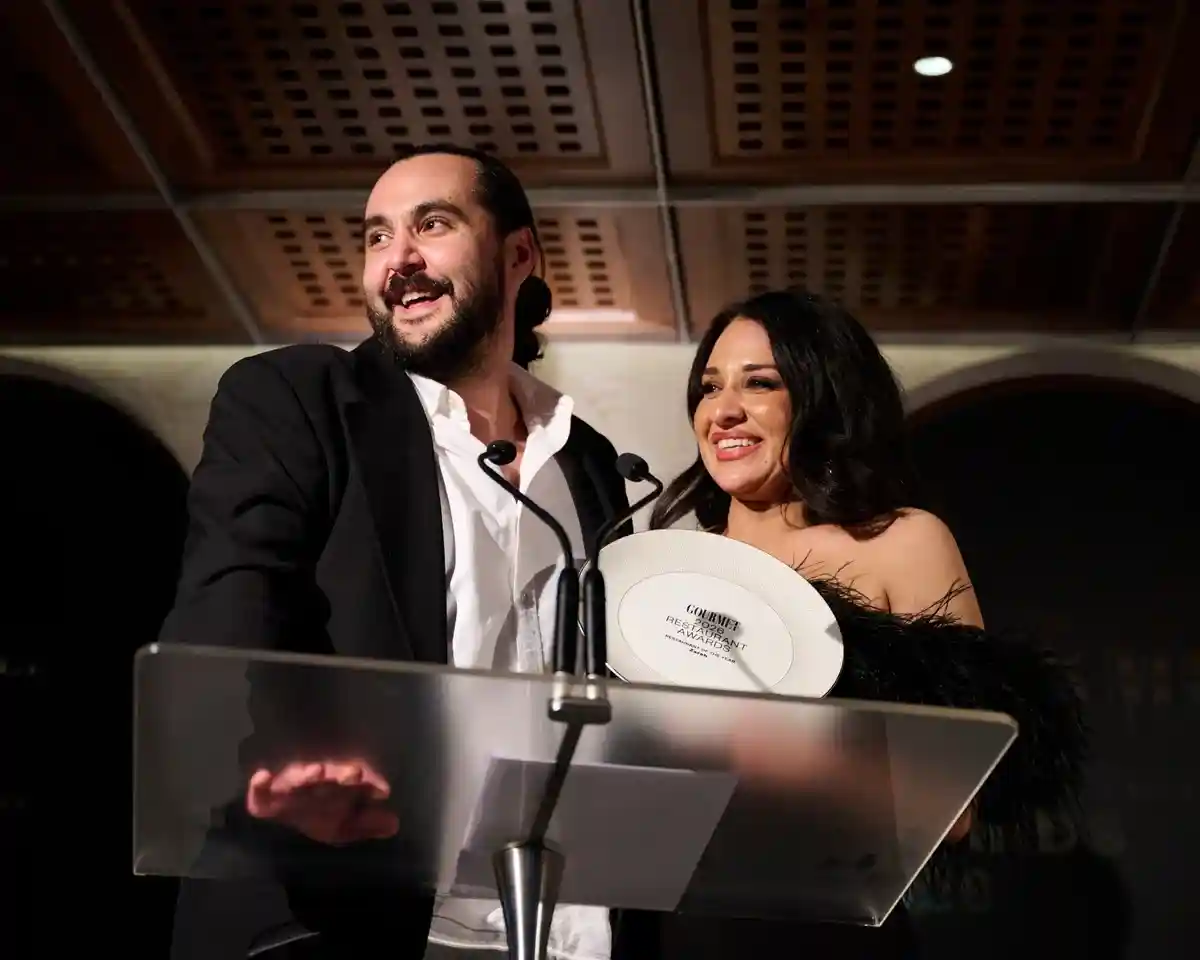
Zareh Takes Australia’s Top Restaurant Honour
Melbourne’s restaurant scene has another major reason to celebrate. Zareh, the Collingwood restaurant built around Armenian, Lebanese and broader Middle Eastern culinary traditions, has been named Gourmet Traveller’s 2026 Restaurant of the Year, placing the relatively young venue among Australia’s most celebrated dining destinations.
The announcement marks a significant moment not only for Zareh but also for the changing identity of Australian restaurant culture. Historically, Gourmet Traveller’s top honour has often been associated with ambitious fine dining, highly formal service and European-influenced cuisine. Zareh’s win offers a different picture of what Australia’s best restaurant can look like: intimate, culturally rooted, produce-driven and sophisticated without relying on traditional fine-dining conventions.
The Melbourne restaurant was established in August 2025 by chef Tom Sarafian and his partner Jinane Bou-Assi. Drawing on Sarafian’s Armenian and Egyptian background and Bou-Assi’s Lebanese heritage, Zareh presents food as both a dining experience and a story about family, migration, memory and cultural exchange.
Its recognition comes only about a year after opening, making the Gourmet Traveller Restaurant of the Year award particularly remarkable. Zareh has quickly moved from being one of Melbourne’s exciting new restaurants to being recognised as one of the country’s most important contemporary dining destinations.
A Restaurant Built Around Family and Heritage
The name Zareh is deeply personal. The restaurant is named after Tom Sarafian’s paternal grandfather, an Armenian who came to Australia from Egypt. That family connection is central to the restaurant’s identity, with its food reflecting the culinary traditions and memories that shaped Sarafian and Bou-Assi.
Gourmet Traveller previously described Zareh as a restaurant inspired by Sarafian’s Armenian heritage and Bou-Assi’s Lebanese background, while also drawing on the broader history of cultural exchange between Armenian and Lebanese communities.
That history gives Zareh a distinctive culinary point of view. Rather than attempting to reproduce one narrow definition of Armenian or Lebanese food, the restaurant explores the connections between cultures that have influenced each other over generations.
For Sarafian, the restaurant represents more than a business. It is a tribute to the people, places and food traditions that shaped his family history.
Zareh’s official description similarly positions the restaurant as a celebration of family, tradition and hospitality. Its kitchen revolves around a wood-fired oven and charcoal barbecue, with dishes inspired by Armenian and Lebanese heritage as well as Sarafian’s travels through North Africa and the Middle East.
That combination of personal history and modern Australian produce has become one of the restaurant’s greatest strengths.
The Food at the Heart of Zareh
One of the reasons Zareh has attracted so much attention is the way its menu combines traditional flavours with exceptional Australian ingredients.
The restaurant’s cooking is not simply about recreating familiar Middle Eastern dishes. Instead, Sarafian uses techniques, flavours and memories from his cultural background as a foundation for contemporary cooking.
Among the dishes that have received attention is hummus topped with spanner crab and king prawn, served alongside wood-fired aish baladi, an Egyptian flatbread. The combination demonstrates the restaurant’s approach: recognisable Middle Eastern foundations are elevated through premium local seafood and carefully considered preparation.
Another standout is kafta nayyeh, a dish made with raw lamb and seasoned with herbs and spices before being served with crisp-fried pita. Gourmet Traveller’s restaurant review praised the dish as part of a menu where Armenian, Egyptian and Lebanese influences come together naturally.
Zareh’s bastourma toast has also become an example of the restaurant’s ability to transform traditional ingredients into something that feels distinctly its own. The dish combines house-made bastourma made from cured and air-dried wagyu with chemen sauce, goat cheese, roasted peppers and herbs on chargrilled sourdough.
The menu can also include dishes such as beef manti with garlicky labne and ghapama, an Armenian dish involving pumpkin filled with spiced rice, dried fruit and nuts and cooked in the restaurant’s wood-fired oven.
These dishes reveal why Zareh’s food has resonated so strongly with critics. It is familiar enough to communicate the traditions behind it while being creative enough to feel contemporary.
Local Australian Produce Meets Middle Eastern Flavour
A defining feature of Zareh is its commitment to Australian produce.
Sarafian’s cooking takes advantage of ingredients sourced from local farms while incorporating carefully selected products from overseas. Gourmet Traveller reported that the restaurant uses ingredients including pomegranate molasses, pine nuts and fermented pepper pastes, with some specialty products sourced through Lebanese food business Droubna.
The result is a menu that connects Melbourne to the Middle East without attempting to separate the two.
An Egyptian flatbread can be made with flour milled in the Mornington Peninsula. Lamb can come from Tasmania and Victoria. Local heirloom pumpkins can become the centrepiece of a traditional Armenian preparation.
This is an important part of what makes Zareh representative of modern Australian food culture. The restaurant demonstrates how migration and local agriculture can coexist on the same plate.
Rather than viewing cultural authenticity and Australian produce as opposing ideas, Zareh treats them as complementary.
Why Gourmet Traveller’s Recognition Is Significant
Winning Gourmet Traveller’s Restaurant of the Year is one of the most significant achievements a restaurant in Australia can receive.
The award is particularly meaningful because of the restaurants that have previously held the title. The list includes some of Australia’s most influential dining establishments, including Saint Peter, Attica, Orana and Quay.
Saint Peter, led by chef Josh Niland, won the 2025 award, with Gourmet Traveller praising its commitment to seafood, service and world-class dining.
Zareh’s victory therefore places it in a remarkable lineage.
But there is an important difference between Zareh and many of the restaurants associated with the award’s history. Zareh is relatively casual and intimate rather than being built around traditional formal fine dining.
That difference is exactly what makes the 2026 result so interesting.
The Rise of Casual Fine Dining in Australia
Zareh’s victory could represent a broader shift in Australian restaurant culture.
For decades, the phrase “best restaurant” often brought to mind tasting menus, white tablecloths, extensive wine programs and highly formal service. Today, Australia’s dining culture is becoming increasingly diverse.
Restaurants are proving that exceptional food does not have to come with excessive formality.
Zareh is a strong example. The restaurant has only around 40 seats and is designed to feel intimate and welcoming. Its dining room incorporates soft green tones, pink lime-washed walls, deep timber and personal objects connected to Sarafian’s family and travels.
The restaurant’s official description emphasizes the open kitchen, wood-fired oven and charcoal barbecue, creating an environment where guests can experience the cooking as part of the meal itself.
The atmosphere feels personal rather than corporate. That sense of warmth is central to the restaurant’s identity.
A Melbourne Restaurant With a Global Perspective
Zareh is also a reflection of Melbourne’s reputation as one of Australia’s great food cities.
The city has long been known for its multicultural restaurant scene, where cuisines from around the world have become part of everyday life. Zareh fits naturally into that environment while still bringing a distinctive perspective.
Its Armenian and Lebanese influences are particularly important because they allow the restaurant to introduce diners to food traditions that may be less familiar to mainstream Australian audiences.
At the same time, Sarafian’s professional background gives the cooking an international perspective. His experience includes kitchens in Melbourne and London, including St John, while his earlier work has included Melbourne venues such as Bar Saracen, Lumi and MoMo.
That combination of family heritage, professional training and international experience helps explain why Zareh feels both deeply personal and confidently modern.
The Drinks Program Adds Another Layer
Food may be the primary attraction, but Zareh’s drinks program contributes significantly to the overall experience.
The restaurant’s cocktail offering includes a strong focus on arak, a spirit traditionally associated with the Levant. Gourmet Traveller reported that Zareh works with Lebanese-made Arak Farid and incorporates the spirit into its cocktail program.
The wine list also includes producers from Armenia and Lebanon alongside Australian and international wines.
An arak-based martini is among the creative options, while Armenian brandy can provide a distinctive way to finish the meal.
This attention to beverages reinforces the restaurant’s broader philosophy. Zareh does not treat its cultural identity as something limited to the food menu. The influence extends into the drinks, music, decor and overall hospitality.
A Restaurant That Tells a Story
Perhaps the most compelling element of Zareh is that the restaurant tells a story without making the experience feel like a history lesson.
The name, dishes, ingredients and interior details all connect to Sarafian and Bou-Assi’s backgrounds.
Gourmet Traveller has noted personal touches throughout the restaurant, including Turkish plates, Iranian copper pieces, Lebanese water jugs and a replica of a glass sliding door from Sarafian’s grandparents’ home. The restaurant also features a collection of Arab, Armenian and Iranian records.
These details create a feeling that guests are entering someone’s world rather than simply walking into another fashionable restaurant.
That authenticity may be one of the reasons Zareh has developed such a strong reputation so quickly.
Zareh’s Rapid Rise
The speed of Zareh’s rise is extraordinary.
The restaurant opened in August 2025, and within months it was attracting attention from critics, food publications and Melbourne diners. Gourmet Traveller’s January 2026 review described Sarafian’s first standalone restaurant as hitting the ground running and praised its Armenian, Egyptian and Lebanese-influenced menu.
The recognition did not come only from Gourmet Traveller. Zareh also appeared among the standout restaurants in Melbourne’s 2026 food awards conversation, reinforcing its position as one of the city’s most exciting new dining destinations.
That momentum has now culminated in Australia’s top national restaurant honour from Gourmet Traveller.
What Zareh’s Win Means for Australian Dining
Beyond the restaurant itself, Zareh’s success sends an important message about the future of Australian cuisine.
Australia’s dining identity has always been shaped by migration. Restaurants founded by immigrant families and chefs have contributed enormously to the country’s culinary landscape, introducing ingredients, techniques and traditions that have become part of everyday Australian food culture.
Zareh brings that history into the spotlight.
Its Armenian, Egyptian and Lebanese influences are not treated as secondary elements. They are the foundation of the restaurant’s identity.
At the same time, the food is unmistakably connected to Australia through local farms, seafood, meat, grains and seasonal produce.
That balance is increasingly becoming one of the defining characteristics of modern Australian dining.
The Next Chapter for Zareh
Winning Restaurant of the Year only a year after opening will inevitably create new expectations for Zareh.
The challenge for any newly celebrated restaurant is maintaining the qualities that made it special while continuing to evolve.
For Zareh, that could mean continuing to explore the connections between Armenian, Lebanese, Egyptian and Australian food cultures while developing new dishes around seasonal ingredients.
The restaurant’s relatively flexible approach to its menu gives the team room to experiment.
Its intimate size may also help preserve the sense of hospitality that has become central to the Zareh experience.
Rather than attempting to become a bigger or more formal restaurant, the award may allow Zareh to continue refining what it already does exceptionally well.
Final Thoughts
Melbourne’s Zareh has earned its place at the top of Australia’s restaurant landscape after being named Gourmet Traveller’s 2026 Restaurant of the Year.
The achievement is remarkable not simply because Zareh is young, but because of what the restaurant represents. Its success demonstrates that Australian dining is moving beyond traditional definitions of fine dining and increasingly embracing restaurants that combine exceptional cooking with cultural identity, hospitality and personal storytelling.
Chef Tom Sarafian and Jinane Bou-Assi have created a restaurant where Armenian, Lebanese and Egyptian influences meet Australian produce, modern technique and Melbourne’s famously diverse dining culture.
From hummus topped with spanner crab and king prawn to kafta nayyeh, bastourma toast and wood-fired dishes, Zareh’s menu demonstrates that heritage can be preserved while still being allowed to evolve.
Its place among previous Gourmet Traveller Restaurant of the Year winners such as Saint Peter, Attica, Orana and Quay makes the achievement even more significant.
But perhaps the most exciting part of Zareh’s story is that its journey is only beginning.
For Melbourne diners and food lovers across Australia, the award confirms what many had already discovered: Zareh is not simply another new restaurant. It is one of the venues helping define what Australian dining can become next.
SEO Keywords
Zareh Melbourne, Zareh restaurant, Zareh Collingwood, Gourmet Traveller Restaurant of the Year 2026, Melbourne restaurant news, best restaurant Melbourne, best restaurant Australia 2026, Armenian Lebanese restaurant Melbourne, Tom Sarafian, Jinane Bou-Assi, Melbourne dining, Australian restaurant awards, Gourmet Traveller awards, Middle Eastern restaurant Melbourne, Collingwood restaurants
Sources and References
Gourmet Traveller — Tom Sarafian’s first restaurant, Zareh, is now open in Melbourne
Gourmet Traveller — Zareh Restaurant Review
Zareh — Official Restaurant Website
Gourmet Traveller — 2025 Restaurant of the Year: Saint Peter
Leave a Reply