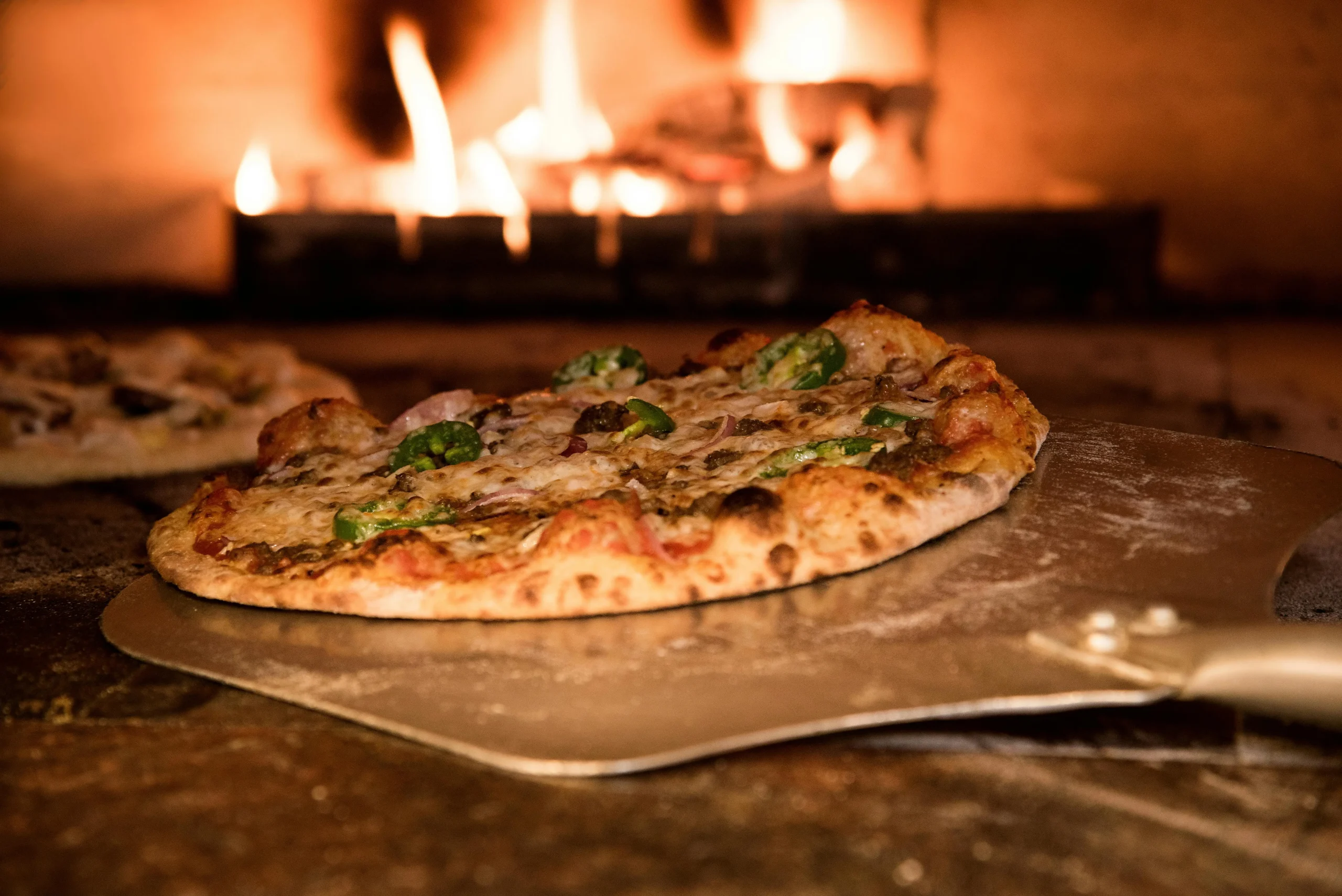
You’re scrolling through a food delivery app, hungry and faced with a dizzying array of choices. You bypass your usual spots and land on a new one—”Supreme Slice Pizzeria”—with enticing photos and great reviews. You tap “order,” and 30 minutes later, a delicious pizza arrives. What you don’t know is that “Supreme Slice Pizzeria” doesn’t exist.
There are no red-and-white checkered tablecloths, no friendly waiters, and no physical storefront. Your pizza was made in a shared, industrial warehouse space alongside dozens of other delivery-only “restaurants.” This is the world of the ghost kitchen, a phenomenon that exploded during the pandemic and fundamentally rewired the restaurant industry.
This delivery-first, digital-only model was hailed as the future of dining—a low-cost, high-efficiency solution for the modern age. But as the world has reopened, the ghost kitchen has become one of the most polarizing topics in food. Is it a brilliant, permanent innovation, or was it just a pandemic-era fad whose time has passed?
The Promise: Why the Ghost Kitchen Model Became a Juggernaut
The appeal of the ghost kitchen model for entrepreneurs and existing restaurants is undeniable. It strips away the two biggest barriers to entry in the restaurant business: cost and risk.
- Dramatically Lower Startup Costs: Opening a traditional restaurant requires a massive capital investment in a prime location, dining room furniture, front-of-house staff, and extensive permits. A ghost kitchen eliminates all of that. Operators can rent a small space in a low-rent industrial area, focusing solely on kitchen equipment and a delivery-optimized workflow.
- Flexibility and Data-Driven Agility: A ghost kitchen can pivot on a dime. If a fried chicken concept isn’t working, the operator can switch to a salad brand overnight with minimal cost, simply by changing the menu on the app. They can use real-time data from delivery platforms to track trends, test new items, and optimize their offerings for what customers are actually ordering.
- The “Host Kitchen” Revenue Stream: For existing brick-and-mortar restaurants, ghost kitchens offered a lifeline. A local diner could use its existing kitchen and staff during off-peak hours to run a separate, delivery-only “virtual brand”—like a wing joint or a burger spot—out of its back door. This created a new revenue stream using resources they already had.
The Backlash: The Cracks in the Facade
For all its brilliant efficiency, the ghost kitchen model quickly began to reveal significant flaws, leading to a backlash from consumers and industry veterans alike.
- The Quality Control Crisis: Food designed to be eaten within minutes of leaving the kitchen often suffers during a long delivery journey. Without the immediate feedback loop of a dining room, standards in a ghost kitchen can slip. The result can be soggy fries, lukewarm entrées, and a generally disappointing experience.
- The “Restaurant Catfish”: Perhaps the biggest criticism is the lack of transparency. Consumers discovered that dozens of seemingly different “restaurants” on their apps—from “California Fresh Salads” to “Tony’s Calzone World”—were all operating out of the same, single kitchen. This felt deceptive, leading diners to wonder if they were ordering from a specialist or just a generic assembly line.
- The Soulless Transaction: Restaurants are about more than just food; they are about hospitality. A great neighborhood spot has a story, a connection to its community, and a chef or owner who is accountable. A ghost kitchen, by its very nature, is often a faceless brand that exists only as a logo on an app. When an order is wrong, there’s no manager to talk to, just a frustrating chatbot. It removes the humanity from hospitality.
- Saturating the Market: The proliferation of hundreds of low-cost virtual brands on delivery apps has made it even harder for traditional, local restaurants to compete. Beloved neighborhood spots that invest in their community and staff now have to fight for visibility against a flood of purely digital competitors.
The Evolution: Ghost Kitchens 2.0
The initial “gold rush” phase of ghost kitchens—where quantity trumped quality—is ending. In its place, a more mature and sustainable model is beginning to emerge.
- The Rise of the Trusted “Host Kitchen”: The most successful and sustainable version of the ghost kitchen is proving to be the one integrated into an existing, trusted restaurant. When a local Italian place you know and love launches a high-quality “Garlic Bread Heroes” virtual brand, you order with confidence. They are leveraging their existing reputation for quality, not hiding behind an anonymous logo.
- A Curated Approach: Large ghost kitchen providers are learning that hosting thousands of mediocre brands leads to a bad customer experience. The new focus is on quality over quantity. They are now acting more like food hall curators, partnering with a smaller number of established, popular brands (like national chains looking to expand their delivery reach) or high-quality local heroes.
- The Niche Incubator: Ghost kitchens remain a fantastic, low-risk way to bring niche cuisines to areas that might not be able to support a full brick-and-mortar restaurant. They can be a launchpad for immigrant chefs or for testing a highly specialized concept, like authentic regional Thai food or vegan comfort food, before investing in a full-scale operation.
The Verdict: So, Are They Here to Stay?
Yes, ghost kitchens are absolutely here to stay—but not in the chaotic, unregulated form that first defined them. The idea of a restaurant that exists only to serve the massive, permanent demand for food delivery is too powerful to disappear.
However, the model is maturing. The future is not an endless scroll of anonymous, interchangeable brands. Instead, the ghost kitchen concept will become a more integrated and trusted part of the dining ecosystem. Expect to see more of your favorite local restaurants running their own high-quality virtual brands, and more curated, delivery-focused food halls offering a variety of reliable choices.
The ghost kitchen won’t kill the traditional restaurant. The desire for the experience of hospitality—the ambiance, the service, the connection—is too strong. But it has permanently changed the economics of food delivery, carving out a new, powerful, and distinctly digital chapter in the story of how we eat.
Leave a Reply