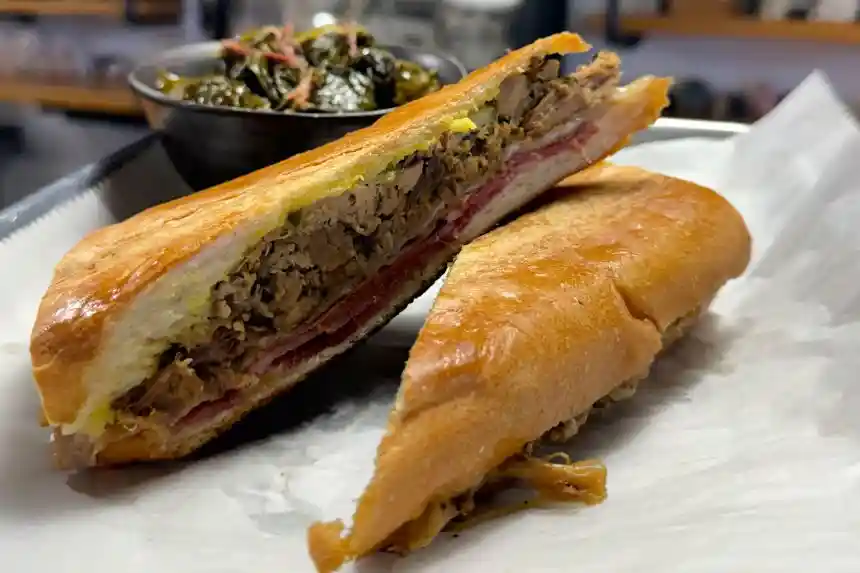
Few sandwiches inspire as much hometown pride as the Cuban sandwich. In Florida, the debate is especially intense because two cities, Miami and Tampa, have strong claims to the sandwich’s identity, history and evolution. Both cities have deep connections to Cuban culture, but their versions of the famous pressed sandwich are noticeably different.
So which Florida city really deserves credit for the Cuban sandwich?
The answer is more complicated than simply choosing Miami or Tampa.
Recent attention surrounding the long-running debate has brought the history of the Cuban sandwich back into the spotlight. According to historians who have studied the sandwich’s origins, the story does not begin in either Florida city. Instead, the sandwich traces its roots to Cuba before evolving through migration and becoming closely associated with Florida’s Cuban communities.
That history helps explain why Tampa and Miami can both have such strong connections to the Cuban sandwich while producing versions that are not exactly the same.
The Cuban Sandwich Has Cuban Roots
The first important detail in the Cuban sandwich debate is that its story begins in Cuba.
Researchers Bárbara Cruz, Jeff Houck and the late Andrew Huse explored the sandwich’s history in their book, “The Cuban Sandwich: A History in Layers.” Their research found that the sandwich developed from Cuban food traditions and an earlier style known as a mixto, meaning “mixed.”
The early Cuban version was influenced by the Spanish bocadillo, a simple sandwich made with bread, cheese and available protein. Over time, the Cuban mixto developed into a more substantial sandwich containing multiple ingredients. Historical newspaper advertisements from Cuba helped researchers trace the sandwich’s evolution during the late 19th century.
This means the Cuban sandwich was already evolving before it became closely associated with Florida.
As Cuban immigrants moved throughout the United States, they brought their food traditions with them. Key West became one of the earliest major destinations for Cuban migration to Florida, followed by Tampa and eventually Miami.
Each community adapted the sandwich according to its own food traditions, ingredients and cultural influences.
Why Tampa Has Such a Strong Claim
Tampa’s connection to the Cuban sandwich is closely tied to the city’s cigar industry.
During the late 19th century, Cuban cigar workers and other immigrants established communities in Tampa, particularly in Ybor City. The cigar industry brought large numbers of workers to the area, creating a multicultural community that included Cuban, Spanish, Italian and other immigrant groups.
The Cuban sandwich became a practical meal for workers. It was portable, filling and relatively easy to eat during a workday.
Historian Rodney Kite-Powell told CNN that sandwich vendors and restaurants served Cuban sandwiches from small windows and bars. Workers could take the sandwich with them, eat part of it and save the rest for later.
That working-class history became an important part of Tampa’s relationship with the sandwich.
The city eventually developed its own recognizable version of the Cuban sandwich, which commonly includes roast pork, ham, Swiss cheese, pickles and mustard, along with Genoa salami.
That salami is one of the biggest differences between Tampa’s Cuban sandwich and the version commonly associated with Miami.
Why Salami Became Part of Tampa’s Cuban Sandwich
For many Tampa residents, Genoa salami is not an optional ingredient. It is part of what makes a Tampa Cuban sandwich a Tampa Cuban sandwich.
The addition reflects the multicultural environment of Ybor City during the city’s cigar-industry boom. Italian immigrants were an important part of Tampa’s history, and salami became incorporated into the local sandwich tradition.
The result was a sandwich that reflected several immigrant communities at once.
The Columbia Restaurant in Tampa describes its traditional Cuban sandwich as a representation of the city’s multicultural history. Its version combines Cuban roast pork and Cuban bread with Spanish ham, Italian salami, mustard and pickles, while Swiss cheese represents another part of the area’s melting-pot heritage.
Tampa’s version therefore became more than a simple Cuban dish. It became a reflection of the people who helped build the city’s neighborhoods and food culture.
The city officially recognized that cultural connection in 2012 when the Tampa City Council declared the Cuban sandwich Tampa’s signature sandwich.
Miami Has Its Own Cuban Sandwich Tradition
Miami’s relationship with the Cuban sandwich developed differently.
Although Cuban migration to Florida had begun much earlier in places such as Key West and Tampa, Miami experienced a major increase in Cuban immigration following the Cuban Revolution in 1959. Additional migration waves, including the Mariel boatlift in 1980, helped establish South Florida as a major center of Cuban American culture.
As Cuban communities expanded throughout Miami, Cuban food became deeply embedded in everyday life.
The Miami Cuban sandwich generally includes Cuban bread, roast pork, ham, Swiss cheese, pickles and yellow mustard. Unlike the traditional Tampa version, salami is generally not included.
Miami’s bread also tends to have a different texture. CNN’s recent examination of the debate notes that Tampa Cuban bread is generally more crusty while Miami bread has a more delicate, fragile exterior.
These differences may seem small to an outsider, but for Cuban sandwich enthusiasts, they can be central to the identity of the sandwich.
The Bread Debate May Be More Important Than the Salami
When people discuss the Miami versus Tampa Cuban sandwich debate, the conversation often immediately turns to salami.
But according to Jeff Houck, one of the researchers behind “The Cuban Sandwich: A History in Layers,” bread may actually be the more significant difference.
Tampa Cuban bread is known for its crusty exterior and tender interior. Miami’s version tends to have a thinner, more delicate crust. Those differences influence how the sandwich responds to pressing and how the finished sandwich feels when eaten.
Bread is particularly important because the Cuban sandwich is traditionally pressed.
The heat melts the Swiss cheese, warms the meats and creates a crisp exterior. A good Cuban sandwich balances that crunchy bread with tender pork, salty ham, melted cheese, tangy pickles and mustard.
That combination of textures is part of what makes the sandwich so recognizable.
La Segunda Bakery and Tampa’s Cuban Bread Tradition
One of Tampa’s most important connections to the Cuban sandwich is La Segunda Bakery.
The bakery has been part of Tampa’s food history since 1915 and has been operated by four generations of the Moré family. According to CNN’s recent report, the bakery produces more than 20,000 loaves of Cuban bread each day.
One of its most recognizable traditions is placing a palmetto leaf across the top of each loaf. The practice helps retain moisture as the bread bakes.
La Segunda bread has become deeply connected to Tampa’s Cuban sandwich culture, with restaurants throughout the city using its bread for their sandwiches.
That includes historic establishments such as the Columbia Restaurant in Ybor City.
The continued popularity of La Segunda demonstrates how much bread matters to Tampa’s version of the sandwich.
Columbia Restaurant Keeps the Tradition Alive
Few restaurants are as closely associated with Tampa’s Cuban sandwich history as Columbia Restaurant.
Founded in Ybor City in 1905, Columbia Restaurant is Florida’s oldest restaurant and has served Cuban sandwiches for generations. The restaurant’s version includes the ingredients associated with Tampa’s traditional sandwich, including salami.
The restaurant’s Cuban sandwich reflects the multicultural history of Ybor City. Instead of representing only Cuban cuisine, it incorporates influences from several immigrant communities that lived and worked in the neighborhood.
That history is one reason the Cuban sandwich has become such an important symbol of Tampa.
It is not simply a recipe passed from one generation to another. It represents the history of immigration, labor and cultural exchange that shaped the city.
Miami’s Cuban Sandwich Became a Cultural Symbol
Miami’s Cuban sandwich developed into something equally significant.
In neighborhoods such as Little Havana, the sandwich became part of everyday Cuban American life. Restaurants and cafeterias made the Cubano accessible to generations of residents and visitors.
Places such as Versailles have helped cement the sandwich’s connection to Miami’s Cuban identity. The famous restaurant on Calle Ocho has served its Cuban sandwich since opening in 1971 and remains an important part of Miami’s Cuban food culture.
Modern Miami restaurants have also continued to reinterpret the sandwich.
Sanguich, for example, has built a reputation around carefully prepared Cuban sandwiches and received Michelin Bib Gourmand recognition. Its approach emphasizes ingredients such as slow-cooked pork, Cuban bread and house-made components while staying connected to the traditional sandwich.
This shows how Miami’s Cuban sandwich tradition continues to evolve without abandoning its basic identity.
So, Did Tampa or Miami Invent the Cuban Sandwich?
This is where the story becomes particularly interesting.
Historians who studied the subject did not find evidence supporting the idea that Miami invented the Cuban sandwich.
They also did not conclude that Tampa invented the sandwich from scratch.
Instead, the research points back to Cuba as the sandwich’s original cultural source, followed by a long period of evolution as Cuban migrants moved throughout the Caribbean and United States.
Tampa played an important role in transforming the sandwich into the recognizable pressed Cubano associated with Florida. Miami later developed its own highly influential version as Cuban immigration transformed South Florida into one of the world’s most important centers of Cuban American culture.
That makes the argument less about identifying a single winner and more about understanding how food evolves.
The Cuban Sandwich Is a Story of Migration
Perhaps the most fascinating part of the Cuban sandwich story is that migration is at the center of it.
The sandwich traveled with people.
As Cuban communities moved from Cuba to Key West, Tampa, Miami and other parts of the United States, the sandwich changed with them.
Ingredients became locally available. Different immigrant communities contributed their own foods. Bread-making traditions developed differently. Restaurants adapted recipes for their customers.
The result was not one perfectly fixed sandwich.
It became a family of related sandwiches with different regional identities.
That is why a Cuban sandwich in Tampa can taste different from one in Miami while both can still be recognized as a Cuban sandwich.
The Cuban Sandwich Continues to Evolve
The Cuban sandwich is no longer limited to Florida.
Today, restaurants around the world serve their own versions of the Cubano. Some stay extremely close to the traditional ingredients, while others experiment with local flavors.
CNN’s recent report highlighted the international reach of the sandwich, noting that Cuban sandwich variations can now be found as far away as Seoul, South Korea. At Tampa’s International Cuban Sandwich Festival, a Seoul restaurant even won the popular vote with a version incorporating kimchi.
That kind of experimentation may sound controversial to traditionalists, but it also demonstrates the sandwich’s adaptability.
Food traditions rarely remain completely unchanged.
The Cuban sandwich itself is proof of that.
A Sandwich That Represents Two Florida Cities
Miami and Tampa may continue arguing over whose Cuban sandwich is the most authentic, but the history suggests that both cities have legitimate cultural connections to the dish.
Tampa’s version reflects the city’s cigar-industry history and multicultural Ybor City roots. Its use of salami and distinctive Cuban bread has become part of the city’s culinary identity.
Miami’s version reflects the later waves of Cuban immigration that transformed South Florida. Its delicate Cuban bread, pressed preparation and focus on ham, pork, Swiss cheese, pickles and mustard have become synonymous with the Cuban American experience in Miami.
Neither version tells the entire story.
The sandwich existed before either city claimed it. Its history began in Cuba, traveled with migrants and developed through generations of cultural exchange.
Why the Cuban Sandwich Debate Still Matters
At first glance, arguing over whether Tampa or Miami makes the “real” Cuban sandwich might seem like a harmless food rivalry.
But the debate reveals something much bigger about American food culture.
Many of America’s most recognizable foods are shaped by immigration. Recipes change when people move. Ingredients are adapted to new environments. Communities preserve familiar foods while adding influences from their new homes.
The Cuban sandwich is a perfect example.
Its history includes Cuban migration, Spanish influence, Italian ingredients, American food culture and Florida’s unique regional identity.
Every layer tells part of that story.
The Real Story Behind the Cuban Sandwich
So, what is the real story behind the Cuban sandwich?
It is not simply Miami versus Tampa.
The sandwich’s deeper history points back to Cuba and the Cuban mixto, then follows generations of migration and culinary adaptation. Tampa played a major role in shaping the modern sandwich during the city’s cigar-industry era, while Miami developed its own powerful Cuban sandwich culture decades later as Cuban immigration transformed South Florida.
Today, the Tampa and Miami versions remain distinct.
Tampa commonly embraces Genoa salami and its crustier Cuban bread. Miami generally leaves out the salami and is known for its more delicate bread. Both rely on the familiar combination of pork, ham, Swiss cheese, pickles, mustard and pressed Cuban bread.
Ultimately, the Cuban sandwich may not belong exclusively to either Florida city.
It belongs to a much bigger story about Cuban heritage, migration and the way food changes as cultures meet.
And perhaps that is what makes the Cuban sandwich so special.
Whether you order one in Tampa’s historic Ybor City or at a Miami café along Calle Ocho, you’re not simply eating a pressed sandwich. You’re tasting a piece of Florida’s immigrant history, one layer at a time.
Citation Sources
CNN via WSVN, “Two Florida cities claim the Cuban sandwich. What’s the real story?” Published September 26, 2026. Read the CNN/WSVN article
University of South Florida, “The Cuban sandwich story: How USF played a surprising role in its rise to fame.” Read the University of South Florida history
WGCU, “The Cuban Sandwich: A History in Layers.” Read the WGCU feature
Michelin Guide, “Columbia Restaurant: Home to One of the Oldest Cuban Sandwiches in Florida.” Read the Michelin Guide feature
Tasting Table, “Where To Get The 9 Best Cuban Sandwiches In Miami.” Read the Miami Cuban sandwich guide
Leave a Reply