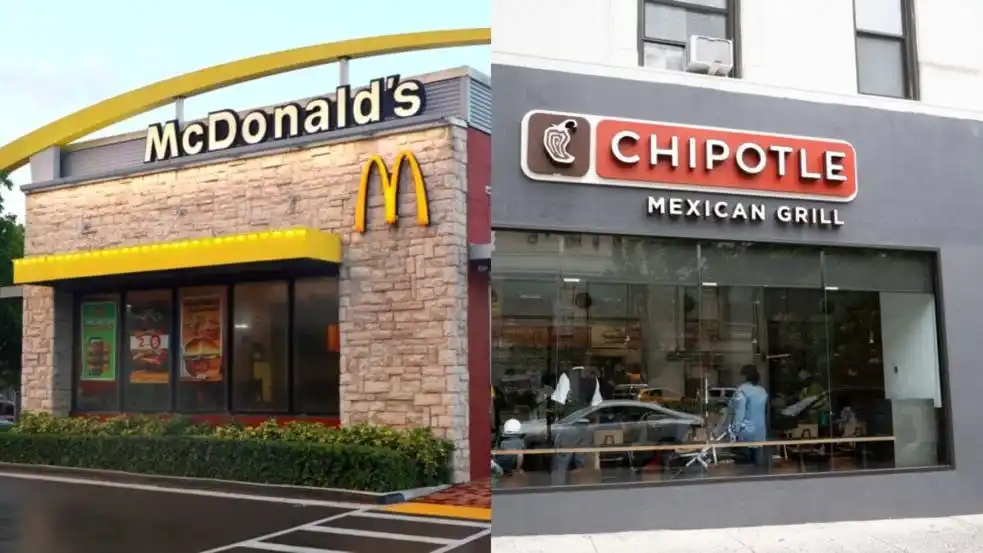
Few decisions in the restaurant industry have become as fascinating in hindsight as McDonald’s decision to walk away from Chipotle Mexican Grill. Nearly two decades after McDonald’s completely separated from the fast-casual chain, investors continue to revisit the decision and wonder what might have happened if the world’s largest burger company had held onto its stake.
McDonald’s had once been Chipotle’s dominant investor. After initially investing in the young restaurant company in 1998, McDonald’s expanded its position over the following years and eventually controlled the vast majority of Chipotle’s voting power. By the time Chipotle went public in 2006, McDonald’s had become deeply involved in the company’s growth.
Yet McDonald’s ultimately decided to exit.
The decision was part of a broader strategic effort to concentrate management attention and financial resources on the McDonald’s brand. At the time, the move made sense from the perspective of a major restaurant company attempting to simplify its business and strengthen its core operation. But Chipotle’s extraordinary growth after becoming independent has transformed the decision into one of the most famous “what if” stories in restaurant investing.
The question today is not simply why McDonald’s sold Chipotle. The bigger question is whether the company underestimated what Chipotle could eventually become.
McDonald’s and Chipotle: How the Relationship Started
Chipotle began as a small restaurant concept founded by Steve Ells in Denver, Colorado. When McDonald’s made its initial investment in 1998, Chipotle was still a tiny business with only a handful of restaurants.
McDonald’s reportedly committed about $50 million during the first year of its investment. The fast-food giant brought substantial financial resources and operational experience to a restaurant concept that was still in its early development.
The partnership helped Chipotle expand rapidly.
McDonald’s investment gave Chipotle access to capital and the operational expertise of one of the world’s most successful restaurant companies. Over the following years, Chipotle grew from a small regional chain into a much larger fast-casual business.
By 2005, McDonald’s held roughly 90% of Chipotle, according to historical accounts of the relationship. Chipotle had also grown to hundreds of locations, demonstrating that the concept had significant potential outside its original market.
For McDonald’s, however, Chipotle represented something different from its traditional business.
Chipotle was not simply another burger chain. Its fast-casual model emphasized customizable burritos, bowls, fresh ingredients and a different restaurant experience. The concept was also positioned toward a customer base that increasingly valued food quality, customization and an alternative to traditional fast food.
That difference would eventually become one of the reasons the investment became so valuable.
Why McDonald’s Decided to Leave
The decision to exit Chipotle was not presented by McDonald’s as an admission that the restaurant concept had failed.
Quite the opposite.
McDonald’s said the separation would allow it to focus its management and financial resources on growing the McDonald’s brand. The company also argued that independence would give Chipotle greater flexibility to pursue its own strategic objectives.
That reasoning is important when looking back at the decision.
Corporate decisions should generally be judged according to the information available at the time rather than solely through the lens of what happened afterward. In 2006, McDonald’s was making a deliberate strategic choice to simplify its portfolio and focus on its core business.
The company was not necessarily predicting that Chipotle would become one of the most valuable restaurant brands in America.
Instead, McDonald’s was choosing to deploy its capital and management attention elsewhere.
That strategy eventually became part of a larger restructuring of the company’s operations and investment portfolio.
The 2006 Chipotle IPO Changed Everything
Chipotle went public in January 2006, and its debut immediately attracted enormous investor attention.
The company priced its IPO at $22 per share, but the stock opened at $44 on its first trading day, reflecting extremely strong demand. Chipotle’s market value climbed rapidly during its first year as a public company.
For McDonald’s, the IPO created an opportunity to monetize part of its investment.
The company sold millions of Chipotle shares during 2006 while retaining a majority position for part of the year. According to McDonald’s SEC filings, the company sold 3 million shares during the first quarter and an additional 4.5 million shares during the second quarter. Those transactions generated substantial proceeds and gains.
McDonald’s then completed its separation from Chipotle later in 2006.
The final transaction was structured as a tax-free exchange. McDonald’s exchanged its remaining Chipotle Class B shares for McDonald’s common stock, completing the company’s exit from the restaurant business.
In other words, the famous Chipotle exit was not one simple sale.
It was a series of transactions carried out over the course of 2006.
McDonald’s Actually Made Money From the Exit
It is easy to look at Chipotle’s later valuation and conclude that McDonald’s simply made a terrible investment decision.
The financial records tell a more complicated story.
McDonald’s generated hundreds of millions of dollars from its Chipotle transactions. Its 2007 annual filing reported gains associated with the sale and exchange of its Chipotle holdings, including a $479.6 million tax-free gain connected to the final exchange of remaining shares.
That means McDonald’s did not walk away empty-handed.
The problem for investors is opportunity cost.
The question is not whether McDonald’s made money from Chipotle. It did.
The question is how much more the investment could have been worth if McDonald’s had maintained its ownership for another decade or two.
That distinction is crucial when evaluating the decision.
A profitable sale can still become an expensive missed opportunity if the asset being sold subsequently appreciates dramatically.
The Chipotle Growth Story After McDonald’s
Once independent, Chipotle continued expanding its restaurant footprint and developing its identity as a major fast-casual brand.
The company’s growth reflected a broader change in the restaurant industry.
Consumers increasingly embraced fast-casual restaurants that offered a middle ground between traditional fast food and full-service dining. Customers could receive meals relatively quickly while still enjoying customizable menus, fresh ingredients and a more contemporary restaurant environment.
Chipotle became one of the most recognizable examples of that shift.
Its brand also developed an identity that was considerably different from McDonald’s. Rather than competing primarily through a standardized burger-and-fries model, Chipotle built its reputation around burritos, bowls, tacos and customizable meals.
The company’s independent identity became one of its greatest assets.
That makes the McDonald’s decision even more interesting because the very characteristics that helped Chipotle flourish were already visible during the years when McDonald’s owned the company.
The Investor “What If” That Won’t Go Away
The reason investors continue to talk about McDonald’s exit is simple: Chipotle became enormously more valuable after the separation.
Recent retrospectives have calculated the enormous theoretical value McDonald’s might have had if it had retained its original stake. One 2024 analysis estimated that a hypothetical 90% ownership position could have been worth tens of billions of dollars based on Chipotle’s then-market capitalization.
Such calculations should be treated carefully.
McDonald’s could not realistically have assumed that it would retain an unchanged 90% stake indefinitely. Chipotle issued shares, went public, and changed its capital structure. A large shareholder attempting to sell or maintain such a position would also have faced tax, market and corporate considerations.
Nevertheless, the calculation illustrates the scale of the opportunity that McDonald’s ultimately gave up.
That is why the story continues to resurface whenever investors examine McDonald’s long-term strategy.
Was McDonald’s Wrong?
There are two ways to answer that question.
From the perspective of hindsight, the decision looks extraordinarily costly.
Chipotle became a major publicly traded restaurant company, while McDonald’s gave up its ownership position just as the fast-casual industry was beginning to enter a powerful growth period.
But from the perspective of 2006, the decision was more defensible.
McDonald’s management wanted to concentrate on its primary brand. Owning a rapidly expanding restaurant company also created management complexity and potentially distracted executives from McDonald’s global business.
The company’s own communications emphasized this reasoning. McDonald’s said the separation would allow it to focus management and financial resources on its core brand, while Chipotle would gain greater independence to pursue its own strategy.
That strategy worked for McDonald’s in important ways.
The company continued investing in restaurants, technology, franchising and shareholder returns. McDonald’s reported that it returned nearly $5 billion to shareholders through dividends and share purchases during 2006 while completing the Chipotle disposition.
So the decision was not simply a case of one company making an obviously irrational choice.
It was a strategic trade-off.
The Lesson for Restaurant Investors
The McDonald’s-Chipotle story offers an important lesson about investing in restaurant companies.
A successful restaurant concept can evolve dramatically over time.
When McDonald’s invested in Chipotle, the company was a small chain. There was no guarantee that it would become a national powerhouse, much less a multibillion-dollar public company.
Large corporations routinely make portfolio decisions based on expected returns, capital requirements and strategic priorities. Some investments become major winners after being sold. Others fail after being retained.
The challenge is that restaurant brands can have extremely long growth trajectories.
A company with a strong concept, loyal customers and room for geographic expansion may create enormous value over decades. Selling too early can therefore be costly, even when the original investment generated an attractive return.
McDonald’s experience with Chipotle is perhaps one of the clearest examples of that phenomenon in the modern restaurant industry.
McDonald’s Focus Versus Restaurant Diversification
The Chipotle decision also reveals something about McDonald’s corporate philosophy.
McDonald’s has historically been strongest when it concentrates on its own global restaurant system. Its franchise model, real estate strategy, technology investments and enormous brand recognition create advantages that smaller competitors cannot easily replicate.
Owning unrelated or semi-related restaurant brands can dilute that focus.
From that perspective, selling Chipotle was consistent with a strategy of concentrating resources on McDonald’s rather than becoming a diversified restaurant holding company.
The trade-off was that McDonald’s surrendered exposure to a restaurant concept that eventually developed a powerful independent growth story.
That tension remains relevant for restaurant investors today.
Should a large restaurant company focus on one dominant global brand, or should it own multiple concepts that can capture different consumer trends?
There is no universal answer.
The Chipotle story simply demonstrates how expensive the wrong decision can look in hindsight.
Why the Story Still Matters in 2026
Nearly 20 years after McDonald’s completed its separation from Chipotle, the story continues to attract investor attention because it represents one of the most dramatic missed-opportunity narratives in the restaurant sector.
The original decision was made for understandable strategic reasons. McDonald’s wanted to focus on its core business, while Chipotle needed the freedom to develop independently.
Both companies went on to build valuable businesses.
But their paths diverged.
Chipotle became one of the most prominent names in fast casual, while McDonald’s remained focused on its enormous global burger business. Investors looking backward naturally wonder whether the two companies could have created even more value by remaining connected.
The answer is impossible to know.
What can be established is that McDonald’s had an unusually large position in a restaurant concept that eventually became enormously valuable, and it chose to exit that position in 2006.
The Bigger Restaurant Industry Lesson
The McDonald’s and Chipotle relationship is more than an interesting piece of restaurant history.
It is a case study in how difficult it is to identify the full potential of a young restaurant brand.
When a concept is small, investors and executives must make decisions based on incomplete information. Expansion requires capital. Competition can change quickly. Consumer preferences can shift. A restaurant that looks promising today may fail tomorrow.
McDonald’s chose to lock in gains and concentrate on its core business.
Chipotle went on to prove that its growth potential was much greater than many investors could have predicted.
That does not necessarily make McDonald’s decision irrational.
It makes it one of the most fascinating examples of opportunity cost in the restaurant industry.
Final Takeaway
McDonald’s exit from Chipotle remains one of the restaurant world’s most enduring investment “what if” stories.
The fast-food giant invested in Chipotle when it was a small and relatively unknown restaurant concept, helped finance its expansion, eventually owned a dominant stake and then separated completely from the business in 2006.
McDonald’s made substantial money from the transactions, and its decision was consistent with a strategy of concentrating on its core restaurant brand. Official company filings show that the Chipotle disposition generated significant proceeds and gains.
But Chipotle’s extraordinary growth after independence created a different legacy.
For today’s investors, the story is a reminder that selling a successful restaurant company can produce an immediate financial benefit while simultaneously eliminating exposure to decades of future growth.
That is why McDonald’s Chipotle decision continues to haunt investors.
It was not necessarily a bad investment.
It was a profitable investment that, in hindsight, became an extraordinarily valuable missed opportunity.
Leave a Reply