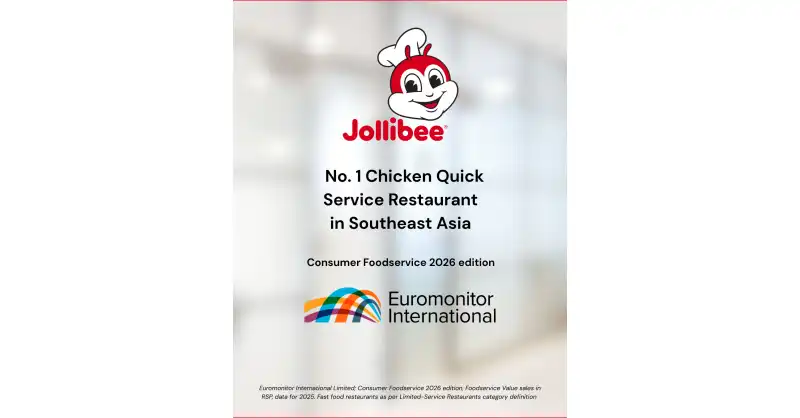
Jollibee is ranked No. 1 Chicken Quick Service Restaurant in Southeast Asia by Euromonitor International for 2026. Explore its growth, market dominance, Chickenjoy success, and global expansion strategy.
Introduction
Jollibee has once again cemented its position as a dominant force in the global fast-food industry after being ranked the No. 1 Chicken Quick Service Restaurant (QSR) in Southeast Asia by Euromonitor International for 2026. The recognition is based on strong value sales performance, brand relevance, and sustained consumer demand across multiple Southeast Asian markets.
This milestone is more than just a ranking. It reflects Jollibee’s long-term strategy of combining localized menu innovation, aggressive regional expansion, and strong emotional branding that resonates deeply with consumers across cultures.
In a highly competitive fast-food landscape dominated by global giants, Jollibee’s rise demonstrates how a homegrown Filipino brand can scale internationally while maintaining strong identity and customer loyalty.
Euromonitor International Recognition: What It Means
Euromonitor International is a globally recognized market research firm known for analyzing consumer industries, including food service and retail. Its rankings are based on rigorous data collection, including:
- Store audits and market penetration analysis
- Value sales performance
- Competitive benchmarking
- Consumer demand patterns
- Industry-level forecasting
According to its Consumer Foodservice 2026 study, Jollibee was ranked as the top-performing chicken-focused QSR brand in Southeast Asia based on 2025 value sales performance.
This ranking highlights Jollibee’s ability to outperform both regional competitors and international fast-food chains in one of the world’s fastest-growing food markets.
Strong Regional Presence Across Southeast Asia
One of the key reasons behind Jollibee’s dominance is its rapidly expanding footprint across Southeast Asia.
The brand operates over 1,600 stores in the region, with a growing presence in:
- Philippines (home market and strongest base)
- Vietnam (one of the fastest-growing markets)
- Singapore (high brand recognition and premium positioning)
- Malaysia (rapid localization success)
- Brunei (strong store network leadership)
Jollibee’s expansion strategy focuses on high-growth urban centers while maintaining consistency in customer experience and brand identity.
According to market data, the brand continues to benefit from strong same-store sales growth and increasing customer frequency, especially in urban middle-class segments.
Chickenjoy: The Core Driver of Success
At the heart of Jollibee’s success is its flagship product: Chickenjoy.
Chickenjoy has become one of the most recognizable fried chicken products in Asia due to its:
- Crispy exterior and juicy interior
- Distinct seasoning profile
- Affordable pricing strategy
- Strong emotional branding
It consistently ranks as one of the most ordered menu items across all markets where Jollibee operates.
Alongside Chickenjoy, other best-selling products include:
- Jolly Spaghetti
- Yumburger
- Peach Mango Pie
These products form the backbone of Jollibee’s “comfort food strategy,” which prioritizes familiarity, affordability, and emotional connection.
Localized Innovation: A Key Competitive Advantage
Jollibee’s success is not solely based on its core menu—it is also driven by its ability to adapt to local tastes.
Across Southeast Asia, the brand has introduced region-specific items such as:
- Spicy Nuggets
- Nasi Lemak Chickenjoy (Malaysia)
- Spicy Spaghetti variations
- Regional dessert innovations like Pistachio-inspired treats
This localization strategy allows Jollibee to remain globally consistent while still appealing to local preferences.
Market analysts highlight this approach as one of the strongest drivers of Jollibee’s sustained growth in diverse food cultures.
Consumer Appeal: Why People Choose Jollibee
Jollibee’s popularity is not limited to Filipino consumers abroad. In fact, in markets like Vietnam, Singapore, and Brunei, the majority of customers are local residents rather than overseas Filipinos.
Key reasons behind its broad appeal include:
1. Taste Consistency
Consumers consistently report strong satisfaction with the flavor profile of Chickenjoy and other core products.
2. Affordable Comfort Food
Jollibee maintains competitive pricing while delivering a premium fast-food experience.
3. Emotional Branding
The brand is heavily associated with happiness, family, and celebration, making it more than just a restaurant.
4. Strong Service Experience
High customer ratings across multiple Southeast Asian markets reflect strong operational standards.
Competitive Landscape in Southeast Asia
The Southeast Asian QSR market is highly competitive, with major global players such as:
- McDonald’s
- KFC
- Burger King
- Local fast-food chains in each country
Despite this competition, Jollibee has managed to secure a leadership position in the chicken segment.
Its success is particularly notable in Vietnam and Brunei, where it has achieved strong market penetration and brand leadership in certain categories.
Expansion Strategy and Global Growth
Jollibee’s ranking is also supported by its broader global expansion strategy.
The company continues to invest in:
- New store openings across Asia, North America, and Europe
- Franchise expansion in high-demand regions
- Supply chain optimization for international operations
- Brand positioning as a global Filipino success story
This expansion strategy is designed to transform Jollibee from a regional leader into a globally competitive fast-food powerhouse.
Brand Strength and Market Positioning
Beyond sales performance, Jollibee has also been recognized for its brand strength and consumer loyalty.
Industry reports highlight:
- Strong brand recall in international markets
- High repeat purchase behavior
- Strong emotional engagement with consumers
- Competitive positioning against global fast-food giants
This combination of emotional branding and operational execution has allowed Jollibee to remain resilient even in highly saturated markets.
Challenges and Future Outlook
Despite its success, Jollibee still faces challenges, including:
- Intense competition from global fast-food chains
- Supply chain complexity across international markets
- Maintaining consistency in product quality across regions
- Adapting to evolving consumer health trends
However, its current trajectory suggests continued growth, especially in emerging Southeast Asian economies and diaspora-heavy markets.
Industry analysts expect Jollibee to continue expanding its footprint while strengthening its premium fast-food positioning.
Conclusion
Jollibee’s recognition as the No. 1 Chicken Quick Service Restaurant in Southeast Asia by Euromonitor International for 2026 is a major milestone that reflects years of strategic growth, innovation, and brand development.
From its iconic Chickenjoy to its aggressive regional expansion, Jollibee has successfully built a fast-food empire rooted in both cultural identity and global appeal.
As Southeast Asia continues to grow as a major consumer market, Jollibee is well-positioned to strengthen its leadership and potentially expand its influence far beyond the region.
Citations
- Jollibee Named No.1 Chicken Quick Service Restaurant in Southeast Asia (Euromonitor Report) — Official Jollibee Group announcement on Euromonitor ranking
- Philippine Star: Jollibee crowned No. 1 chicken QSR in Southeast Asia — News report on Euromonitor recognition
- Business Today: Jollibee Ranked Number 1 Chicken QSR in SEA — Market analysis and ranking overview
Leave a Reply