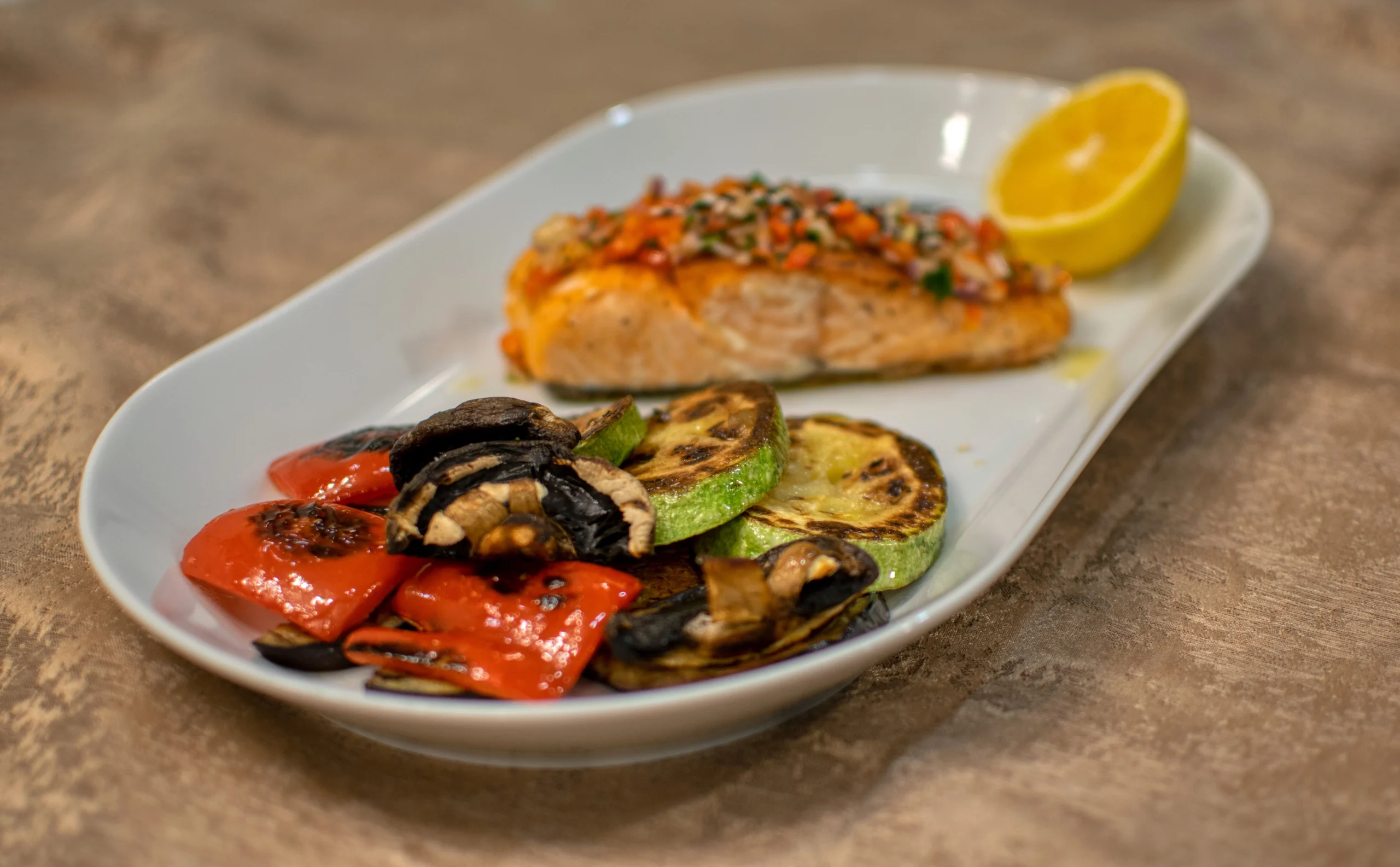
Turmeric Ginger Salmon With Quinoa and Roasted Vegetables
Introduction: Understanding the Role of Food in Wellness
Food is more than a source of calories. The foods we choose every day provide nutrients that support the body’s normal functions, including immune health, digestion, energy production, and tissue maintenance. As interest in wellness continues to grow, many people are looking for meals that are not only delicious and satisfying but also rich in ingredients associated with a balanced, nutritious diet.
This has led to growing interest in anti-inflammatory foods. Rather than focusing on a single ingredient or a restrictive diet, an anti-inflammatory eating pattern generally emphasizes a variety of whole and minimally processed foods, including vegetables, fruits, whole grains, legumes, nuts, seeds, fish, and herbs and spices.
One delicious way to incorporate these foods into your routine is with Turmeric Ginger Salmon With Quinoa and Roasted Vegetables. This colorful dinner combines salmon with turmeric, fresh ginger, quinoa, leafy greens, and roasted vegetables to create a flavorful meal that is rich in protein and a variety of important nutrients.
While no single recipe can eliminate inflammation or replace medical treatment, eating a balanced diet rich in nutrient-dense foods can be an important part of an overall healthy lifestyle. This recipe makes that approach practical by bringing several wholesome ingredients together in one easy meal.
What Are Anti-Inflammatory Foods?
Inflammation is a normal biological process that plays an important role in the body’s response to injury and infection. The problem is not inflammation itself, but rather the potential effects of persistent, low-grade inflammation associated with certain chronic conditions and lifestyle factors.
Diet is one factor that can influence overall health and may play a role in inflammatory processes. An eating pattern centered around vegetables, fruits, whole grains, fish, nuts, seeds, and other minimally processed foods provides a broad range of nutrients and plant compounds.
Rather than searching for a single “anti-inflammatory food,” it is more helpful to think about the overall quality of your diet. A colorful plate containing vegetables, whole grains, lean or plant-based proteins, and healthy fats can provide a variety of nutrients that support general wellness.
Turmeric, ginger, salmon, quinoa, and leafy greens are particularly useful ingredients because they each contribute something different to a balanced meal.
Why Turmeric Is a Popular Wellness Ingredient
Turmeric is a bright yellow-orange spice that has been used in cooking and traditional practices for centuries. It is a member of the ginger family and is particularly common in South Asian cuisine.
Turmeric contains curcumin, a naturally occurring plant compound that has been widely studied for its biological properties. Curcumin is one reason turmeric has attracted so much attention in nutrition and wellness discussions.
However, it is important to keep expectations realistic. Adding turmeric to meals can contribute flavor and beneficial plant compounds, but turmeric should not be viewed as a cure for inflammation or disease.
In this recipe, turmeric provides an earthy flavor and beautiful golden color to the salmon. Combined with ginger, garlic, lemon, and black pepper, it creates a flavorful seasoning that makes the fish especially appealing.
The Wellness Benefits of Ginger
Fresh ginger is another ingredient that brings both flavor and nutritional interest to this recipe. Its warm, slightly spicy flavor pairs naturally with salmon and turmeric.
Ginger contains naturally occurring compounds called gingerols and related compounds that have been studied for their potential biological effects. Ginger is also commonly used in food and beverages as part of traditional culinary practices.
From a cooking perspective, fresh ginger provides a bright and aromatic quality that balances the richness of salmon. Even a small amount can significantly improve the flavor of a dish.
Using fresh ginger rather than relying exclusively on dried spices also adds a fresh element to the recipe. Grating it finely allows the flavor to distribute throughout the marinade.
Why Salmon Is an Excellent Source of Omega-3 Fatty Acids
Salmon is one of the most popular foods associated with an anti-inflammatory eating pattern because it contains omega-3 fatty acids, particularly EPA and DHA.
Omega-3 fatty acids are essential fats, meaning the body needs them but cannot produce enough on its own. Fatty fish such as salmon are among the best dietary sources of EPA and DHA.
These fats are involved in many processes throughout the body and are an important part of a balanced diet. Including fish regularly can be one practical way to increase omega-3 intake.
Salmon also provides high-quality protein, which supports muscle maintenance and numerous other functions. Its combination of protein and healthy fats makes it particularly satisfying as the centerpiece of a balanced dinner.
The Nutritional Value of Quinoa
Quinoa is technically a seed, although it is commonly prepared and eaten like a grain. It has become popular among health-conscious cooks because it provides protein, fiber, minerals, and complex carbohydrates.
Its slightly nutty flavor works particularly well with salmon and roasted vegetables. Quinoa can also be prepared ahead of time, making it a convenient choice for meal preparation.
Using quinoa instead of a more refined carbohydrate is one way to add variety to your diet. However, there is no need to completely avoid other grains. Brown rice, barley, oats, and other whole grains can also be nutritious choices.
The goal is variety. Including different whole foods throughout the week helps provide a broad range of nutrients.
Turmeric Ginger Salmon With Quinoa and Roasted Vegetables
Recipe Overview
This Turmeric Ginger Salmon With Quinoa and Roasted Vegetables combines flavorful salmon seasoned with turmeric, ginger, garlic, and lemon with fluffy quinoa and colorful roasted vegetables. It is a balanced dinner that is rich in protein, healthy fats, fiber, and a variety of vitamins and minerals.
Preparation Time: 15 minutes
Cooking Time: 25–30 minutes
Total Time: Approximately 40–45 minutes
Servings: 4
Ingredients
For the Salmon
4 salmon fillets, approximately 5–6 ounces each
1 tablespoon olive oil
1 teaspoon ground turmeric
1 tablespoon fresh ginger, finely grated
2 cloves garlic, minced
1 tablespoon fresh lemon juice
½ teaspoon black pepper
½ teaspoon paprika
Salt to taste
For the Quinoa
1 cup uncooked quinoa
2 cups low-sodium vegetable or chicken broth
1 tablespoon fresh lemon juice
1 tablespoon chopped fresh parsley
For the Roasted Vegetables
2 cups broccoli florets
1 large red bell pepper, sliced
2 medium carrots, sliced
1 small zucchini, sliced
1 tablespoon olive oil
½ teaspoon garlic powder
¼ teaspoon turmeric
Black pepper to taste
Salt to taste
For Serving
Fresh spinach or arugula
Fresh lemon wedges
Fresh parsley
Pumpkin seeds or chopped walnuts, optional
Step-by-Step Instructions: How to Make Turmeric Ginger Salmon
Step 1: Prepare the Turmeric Ginger Marinade
Begin by preparing the seasoning for the salmon. In a small bowl, combine olive oil, turmeric, grated ginger, minced garlic, lemon juice, black pepper, paprika, and a small amount of salt.
Mix the ingredients until they form a smooth, aromatic marinade.
The combination of turmeric and ginger creates the signature flavor of the recipe, while garlic and lemon add additional depth and freshness.
Pat the salmon fillets dry with paper towels. Place them on a lined baking sheet and brush the turmeric ginger mixture evenly over each fillet.
Allow the salmon to sit for several minutes while you prepare the vegetables and quinoa.
Step 2: Prepare the Roasted Vegetables
Preheat the oven to 400°F (200°C).
Wash and cut the vegetables into similarly sized pieces so they cook evenly. Place the broccoli, bell pepper, carrots, and zucchini on a large baking sheet.
Drizzle the vegetables with olive oil and season with garlic powder, turmeric, black pepper, and salt.
Toss everything together until the vegetables are evenly coated.
Spread the vegetables into a single layer. Avoid overcrowding the pan because this can cause the vegetables to steam instead of roast.
Step 3: Start Cooking the Quinoa
While the oven is heating, rinse the quinoa thoroughly under cool running water. Rinsing helps remove its natural outer coating, which can sometimes create a bitter taste.
Add the quinoa and broth to a saucepan. Bring the mixture to a boil, then reduce the heat and cover the pan.
Allow the quinoa to simmer according to the package directions, generally for around 15 minutes, or until the liquid has been absorbed and the grains appear fluffy.
Remove the saucepan from the heat and allow it to sit covered for several minutes. Fluff the quinoa gently with a fork.
Stir in lemon juice and chopped parsley for extra freshness.
Step 4: Roast the Vegetables
Place the vegetable tray in the preheated oven and roast for approximately 20–25 minutes.
Halfway through cooking, gently toss the vegetables so they brown evenly.
The vegetables are ready when they are tender and have lightly browned edges. Roasting brings out their natural sweetness and creates a delicious contrast with the savory salmon.
Step 5: Bake the Salmon
Place the prepared salmon in the oven and cook until it flakes easily with a fork and reaches a safe internal temperature.
Cooking time will depend on the thickness of the fillets, so avoid relying solely on the clock. A food thermometer is the most reliable way to determine whether salmon has reached a safe temperature.
Avoid overcooking the fish because this can make it dry. Properly cooked salmon should remain moist and tender in the center.
Step 6: Add Fresh Greens
While the salmon is cooking, prepare a handful of fresh spinach or arugula for each serving.
Leafy greens add another layer of nutrition, color, and freshness to the meal. You can serve them raw alongside the quinoa or lightly wilt them before serving.
Adding leafy greens is also an easy way to increase vegetable variety without significantly increasing preparation time.
Step 7: Assemble the Bowls
Divide the cooked quinoa among four bowls or meal prep containers.
Add roasted vegetables alongside the quinoa, followed by a salmon fillet.
Add a handful of fresh spinach or arugula to each bowl. Finish with fresh parsley, a squeeze of lemon, and pumpkin seeds or chopped walnuts if desired.
Serve immediately while the salmon and vegetables are warm.
How to Make This Recipe Even More Nutrient-Dense
The easiest way to make this meal even more nutritious is to increase the variety of colorful vegetables. Different vegetables provide different vitamins, minerals, and plant compounds, so variety is more useful than relying on one “superfood.”
You can add Brussels sprouts, cauliflower, mushrooms, asparagus, red cabbage, or leafy greens depending on the season.
You can also replace quinoa with other whole grains such as brown rice, farro, barley, or wild rice. Each option provides a slightly different flavor and texture.
For additional healthy fats, add avocado, walnuts, pumpkin seeds, or a small drizzle of extra-virgin olive oil.
The goal is to create a meal that is satisfying and varied rather than trying to maximize a particular nutrient.
Easy Ways to Customize Turmeric Ginger Salmon
This recipe is easy to adjust according to personal taste. If you prefer a stronger ginger flavor, add another teaspoon of freshly grated ginger to the marinade.
For a spicy version, add a pinch of cayenne pepper or red pepper flakes. If you prefer a sweeter flavor profile, a small amount of honey or maple syrup can be added to the marinade.
You can also experiment with herbs. Fresh cilantro, parsley, basil, or green onions can complement the salmon beautifully.
For a Mediterranean-inspired variation, add oregano, cherry tomatoes, cucumber, and a small amount of feta cheese.
Meal Prep Tips for Busy Weeks
This salmon bowl is particularly useful for meal prep because the quinoa and roasted vegetables can be prepared ahead of time.
Cook a larger batch of quinoa and store it in airtight containers in the refrigerator. Roast enough vegetables for several meals and divide them into individual portions.
The salmon can be cooked in batches as well. Store the components properly and reheat the meal thoroughly when ready to eat.
For the freshest texture, add leafy greens, lemon juice, herbs, and seeds just before serving.
Preparing components separately also allows you to create different meals throughout the week. The same quinoa and vegetables can be paired with chicken, tofu, beans, or another protein if you want more variety.
Common Mistakes to Avoid When Cooking Salmon
One common mistake is overcooking salmon. Because cooking time depends on the thickness of the fillet, it is better to check the fish rather than following a fixed cooking time without adjustment.
Another mistake is using too much oil or sauce. Salmon naturally contains healthy fats, so a modest amount of olive oil is usually enough to help seasonings adhere to the surface.
It is also important not to overcrowd the vegetables. Give them enough space on the baking sheet so that hot air can circulate around them.
Finally, do not underestimate the importance of fresh lemon juice. A small amount added at the end can brighten the entire meal and balance the richness of the salmon and roasted vegetables.
Why a Balanced Diet Matters More Than a Single Food
The phrase “anti-inflammatory foods” can sometimes create the impression that certain ingredients can counteract the effects of an otherwise unhealthy diet. Nutrition is more complicated than that.
Turmeric, ginger, salmon, quinoa, and vegetables can all be valuable parts of a healthy eating pattern, but no single food can provide all the nutrients the body needs.
A balanced approach focuses on overall dietary patterns. Eating plenty of vegetables and fruits, choosing whole grains, including sources of healthy fats, consuming adequate protein, and limiting highly processed foods can all contribute to a nutritious lifestyle.
This recipe is valuable not because it contains one magical ingredient, but because it combines several nutrient-dense foods into one balanced meal.
How to Make Anti-Inflammatory Eating More Practical
You do not need to completely redesign your kitchen or follow a complicated meal plan to incorporate more nutrient-dense foods.
Start by adding one extra serving of vegetables to dinner. Replace refined grains with whole grains when you enjoy them. Include fatty fish such as salmon regularly if it fits your diet. Use herbs and spices to add flavor instead of relying heavily on salt or highly processed sauces.
Keep ingredients such as frozen vegetables, canned beans, quinoa, nuts, seeds, and spices available so you can quickly build balanced meals.
Small changes are often easier to maintain than dramatic dietary restrictions. Over time, these choices can become part of a sustainable routine.
Final Thoughts: A Flavorful Recipe for Everyday Wellness
Turmeric Ginger Salmon With Quinoa and Roasted Vegetables is a simple example of how wellness-focused eating can be delicious, colorful, and satisfying.
The salmon provides protein and omega-3 fatty acids, turmeric and ginger add distinctive flavor and naturally occurring plant compounds, quinoa provides fiber and carbohydrates, and the roasted vegetables bring an assortment of vitamins, minerals, and other beneficial plant nutrients.
Together, these ingredients create a meal that works for a busy weeknight, weekend dinner, or meal-prep routine.
Most importantly, healthy eating does not have to mean eating bland food or following strict rules. Flavor comes from fresh ingredients, herbs, spices, citrus, and thoughtful cooking techniques. Roasting vegetables, seasoning salmon with aromatic spices, and finishing a meal with fresh lemon can transform simple ingredients into something genuinely enjoyable.
If you are looking for easy anti-inflammatory recipes that support a balanced approach to wellness, this Turmeric Ginger Salmon With Quinoa and Roasted Vegetables is a delicious place to start. Instead of focusing on one “superfood,” build meals around a variety of whole foods and flavors that you can enjoy consistently.
A healthy eating pattern is built one meal at a time, and sometimes the simplest recipes are the ones that make the biggest difference in creating sustainable habits.
Leave a Reply