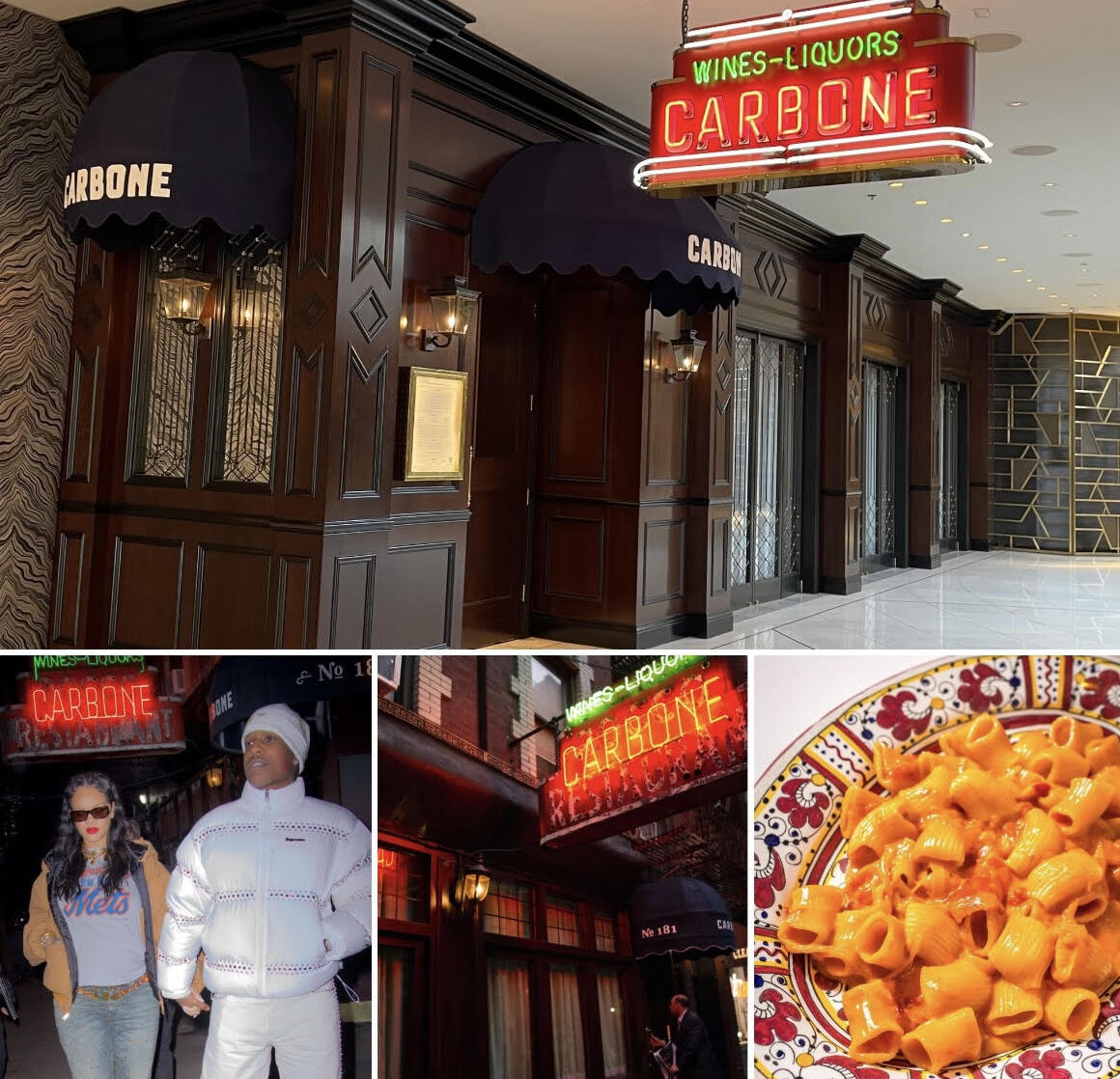
Few restaurants in modern American dining culture have achieved the kind of mythic status that Carbone has. Tucked into Greenwich Village, this Italian-American restaurant has evolved from a trendy New York reservation into a full-blown cultural symbol. It is no longer just a place to eat; it is a place to be seen, a place to experience, and for many, a place that defines what “luxury dining” feels like in the modern celebrity era.
But with all the hype, the impossible reservations, and the constant presence of celebrities like Beyoncé, Jay-Z, Kim Kardashian, Kendall Jenner, Hailey Bieber, Bad Bunny, and Ed Sheeran, a question continues to surface: is Carbone actually worth it?
The answer is not as simple as yes or no. To understand Carbone, you have to understand how it became Carbone in the first place.
The Making of a Modern Dining Legend
Carbone was founded with a clear vision: to revive mid-century Italian-American fine dining and elevate it into something theatrical. The concept is not traditional Italian cuisine in the strict sense. Instead, it is a stylized, nostalgic interpretation of Italian-American classics—the kind of food that feels familiar but is executed with extreme precision and presentation.
From the moment you step inside, the restaurant makes its intention clear. The space is designed like a cinematic set. The lighting is dim, warm, and deliberately dramatic. The staff move with choreographed confidence. Everything feels intentional, almost like you are entering a scene from a classic Hollywood film about New York dining culture.
This theatrical identity is a big part of why Carbone stands out. You are not just sitting down for dinner; you are participating in a performance.
Why Reservations at Carbone Feel Impossible
One of the biggest parts of Carbone’s reputation is its reservation system. Getting a table has become a status symbol in itself. In a world where digital convenience dominates, Carbone has managed to turn scarcity into luxury.
Reservations often book out weeks or even months in advance. Even then, availability is unpredictable. This scarcity fuels demand. The harder something is to get, the more desirable it becomes.
In fact, part of Carbone’s brand identity is that it is not meant to be easily accessible. It is designed to feel exclusive without being overtly elitist. That balance is difficult to maintain, but Carbone has managed to turn difficulty into desirability.
The Celebrity Effect and Cultural Influence
Carbone’s reputation exploded in large part because of its celebrity clientele. It is frequently associated with high-profile figures in entertainment, fashion, and music. When paparazzi photos surface of celebrities dining there, it reinforces the idea that Carbone is not just a restaurant—it is a cultural moment.
Names like Beyoncé and Jay-Z, Kim Kardashian, Kendall Jenner, Hailey Bieber, Bad Bunny, and Ed Sheeran have all been linked to appearances at the restaurant. Whether intentional or not, this constant visibility has transformed Carbone into a symbol of luxury lifestyle culture.
In today’s social media-driven world, restaurants are no longer just judged by food critics. They are judged by visibility, virality, and cultural relevance. Carbone excels in all three.
The Dish That Became Famous: Spicy Rigatoni Vodka
If there is one dish that defines Carbone, it is the spicy rigatoni vodka. This pasta has become so iconic that it transcends the restaurant itself. It is frequently recreated, reviewed, and referenced online.
What makes it special is not complexity but balance. The sauce is creamy, spicy, and deeply flavorful without being overwhelming. The pasta is cooked with precision, allowing it to hold the sauce perfectly. It is comfort food elevated into luxury territory.
The dish has developed what can only be described as a cultural footprint. It appears on social media feeds, food blogs, and even casual conversations about “must-try” dishes in New York. For many visitors, ordering it is not optional—it is the entire point.
But the question remains: is it really that good, or is it the hype talking?
The Experience: Dining as Theater
What separates Carbone from many other Italian restaurants is not just the food but the experience surrounding it. The service style is deliberate and highly polished. Waiters are not just servers; they are performers guiding you through a curated dining journey.
Dishes are often presented with flair. Tableside preparations, dramatic plating, and confident recommendations all contribute to a sense of occasion. It is designed to feel elevated, even when the dishes themselves are rooted in comfort food traditions.
This approach makes Carbone feel different from a typical upscale restaurant. It is closer to immersive dining than traditional fine dining.
However, this also raises expectations. When a restaurant builds itself as an experience, diners expect perfection in every detail.
The Food: Classic, Comforting, and Refined
The menu at Carbone is not experimental. It does not aim to reinvent Italian cuisine. Instead, it refines familiar dishes to a high level of execution.
You will find familiar offerings like Caesar salad, veal parmesan, lobster dishes, and pasta variations. The strength lies in consistency and presentation. Each dish is designed to feel indulgent and satisfying.
The flavors are rich, sometimes heavy, and unapologetically bold. This is not minimalist dining. It is maximalist comfort food presented in a luxury format.
Some diners describe the food as unforgettable. Others argue it is overpriced for what it is. Both perspectives are valid because Carbone sits in a unique category where food and perception are deeply intertwined.
The Price of Popularity
There is no denying that dining at Carbone comes at a premium. The pricing reflects not just the food but the entire experience: the location, the service, the branding, and the cultural relevance.
For some, the price is justified by the ambiance and exclusivity. For others, it feels inflated due to demand rather than culinary innovation.
This tension is common in restaurants that achieve global fame. Once a restaurant becomes a “destination,” it is no longer judged only as a restaurant. It becomes a brand.
Is Carbone Overhyped or Understood?
Whether Carbone is “worth it” depends on what you are expecting.
If you are looking for groundbreaking Italian cuisine that challenges culinary norms, Carbone is not that restaurant. It does not aim to be.
If you are looking for a highly curated dining experience that blends nostalgia, luxury, and celebrity culture, then Carbone delivers exactly that.
The key is understanding that Carbone is not trying to compete with traditional fine dining restaurants. It is competing in a different space entirely: cultural dining experiences.
The Role of Social Media in Carbone’s Fame
In the modern food landscape, social media plays a massive role in defining success. Carbone thrives in this environment. Its dishes are visually appealing, its interior is atmospheric, and its clientele ensures constant online visibility.
Instagram and TikTok have turned Carbone into a digital landmark. People do not just dine there; they document it. This documentation fuels further demand, creating a cycle of visibility and exclusivity.
In many ways, Carbone is as much a social media phenomenon as it is a restaurant.
Final Verdict: Worth the Hype or Not?
So, is Carbone worth the hype?
The honest answer is that it depends on what you value.
If you value culinary innovation alone, you may find other restaurants more impressive. But if you value experience, atmosphere, cultural relevance, and the feeling of being part of something widely recognized, Carbone absolutely delivers.
It is not just a restaurant. It is a stage, a brand, and a symbol of modern luxury dining culture in America.
And that is exactly why people still fight for reservations, still order the spicy rigatoni vodka, and still leave talking about it long after the meal is over.
Because at Carbone, you are not just eating dinner—you are participating in a cultural moment.
Leave a Reply